Horses, Chariots and the elusive Aryans
The bronze age Sintashta culture near the Ural mountains is commonly credited with the invention of chariots. Most authors posit that the Sintashta culture represent the Indo-Iranians who were ancestral to the Vedic Aryans before they moved into India with their chariots and horses. The Harappan civilization is ruled out to be Vedic Aryan because of the supposed lack of horses and chariot usage attested in Vedic literature. But when we look into the archaeological records from post Harappan cultures, we see no increased evidence of usage of horses and chariots.
First let us look into the horse remains from a few sites associated with post-Harappan Painted Grey Ware culture, which many authors associate with the iron age Vedic Aryan Kuru-Panchala kingdom where Vedic orthodoxy prevailed.
The horse only forms around 1% of total animal remains in the ancient site of Atranjikhera which was part of Panchala kingdom.

(Source: Excavations at Atranjikhera: Early Civilization of the Upper Ganga Basin by R.C. Gaur)
Only 4 remains of horses (Equus caballus) has been found from the site of Alamgirpur, that is less than 1% of total animal remains. This is another site which was part of Panchala kingdom.

(Source: Recent Excavations at Alamgirpur, Meerut District: A Preliminary Report by Ravindra N. Singh et al)
Hastinapura, the ancient capital of Vedic Kuru kingdom has yielded only 3 remains of horses

(Source: Excavation at Hastinapur and other Explorations in the Upper Ganga and Sutlej Basins 1950–52 by BB Lal)
Bhagwanpura, a site located in the core Vedic region of Kurukshetra has yielded only around 1% remains of horses out of total animal remains.

(Source: Excavations at Bhagwanpura 1975-76 by JP Joshi)
Madina, another site located in the Kuru realm yielded only 10 horse remains, than too from later iron age phases of the site.

(Source: Excavations at Madina , District Rohtak , Haryana , India edited by Manmohan Kumar, Akinori Uesugi and Vivek Dangi)
From these figures, it is evident that horse remains are too poor or insignificant compared to other animal remains. Compared to these iron age Painted Grey Ware sites in India, the bronze age steppe sites have yielded a considerable amount of horse remains. For instance the Indo-Europeanist David Anthony noted the large amount of horse remains from the Sintashta sites and graves.
"The animal bones from the Sintashta and Arkaim settlement refuse middens were 60% cattle, 26% sheep-goat, and 13% horse. Although beef supplied the preponderance of the meat diet, the funeral sacrifices in the cemeteries contained just 23% cattle, 37% sheep-goat, and 39% horse. Horses were sacrificed more than any other animal, and horse bones were three times more frequent in funeral sacrifices than in settlement middens." (Anthony 2007)
Compared to this, the horse remains are insignificant in the northern Indian sites. We should expect a larger number of horse remains from these sites if the Aryans supposedly arrived and settled in northern India by iron age with their horse-centric culture derived from the steppes.
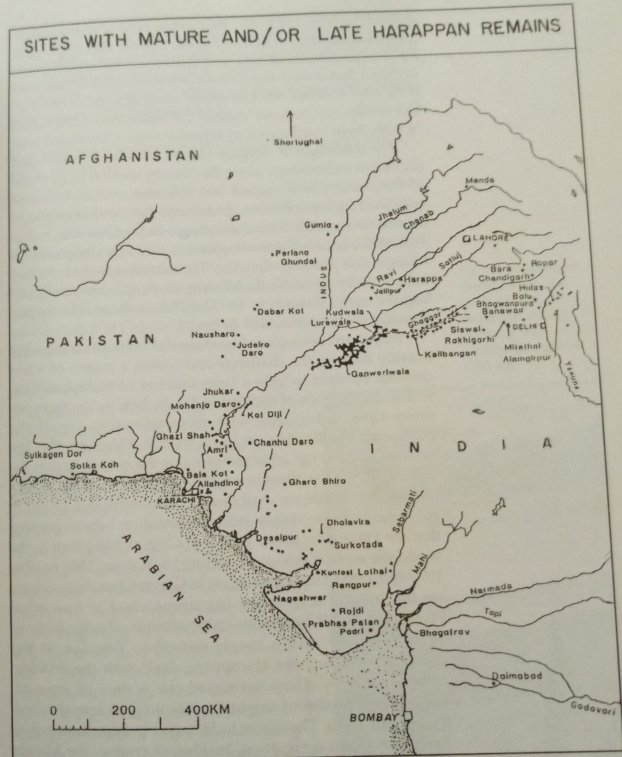
There are few horse remains reported from earlier sites which are dated to the Harappan era like Surkotada, Kalibangan etc. But most of these findings are rejected by the mainstream Indo-Europeanists by stating that these remains may belong to other equine animals similar to horses like donkeys and onagers because their remains are hard to distinguish from those of horses. To quote Richard Meadow who wrote on Harappan horse remains:
“In sum, based on what we observed in Delhi and have outlined above, we cannot accept without serious reservations Bokonyi’s identifications of any of the Surkotada material as true horse, but in the end that may be a matter of emphasis and opinion.”
“One final point needs to be made. Even if one or even a few bones should turn out to be undoubtedly from true horse, that does not mean that every equid bone, by association, is from horse. Each specimen has to be evaluated on its own merits, and for some—perhaps even most—one can only identify the genus (Equus) but not the species (E. hemionus, E. asinus, E. caballus or hybrids) from which they came.” (Meadow and Patel, in Trautmann 2007).
While on the other hand they take the supposed horse remains from sites like Pirak and Swat valley for granted since it suits their preconceived post-Harappan timeline of Aryan movement. If the Harappan era remains are of other horse like equines, then why can’t the post-Harappan remains be also of so called horse-like animals as well?
It is indeed true that depictions of horses in Harappan civilization are quite poor, but it is not nonexistent. There are horse figurines discovered from sites like Lothal, Mohenjo-Daro etc.


Horse headed figure and Terracotta figurine of a horse from Harappan city of Lothal (Source: Lothal: A Harappan Port Town 1955-62 by SR Rao)

Figurine of a horse from Mohenjao-daro (Source: Further excavations at Mohenjo-Daro by EJH Mackay)
Now, one may dismiss these finds as not representing true horses, but depictions of horses from sites like Pirak and Swat valley, which are stated to be the sites with the first occurrences of horses in India, are no better.


Terracotta figurine of a ‘horse rider’ from Pirak and Lid from Swat valley with horse shaped handle (Source: The Roots of Hinduism : The Early Aryans and The Indus Civilization by Asko Parpola)

Figurines of camels and horses from Pirak (Source: The origin of the Indo-Iranians by E E Kuzmina, edited by J P Mallory)
If these post- Harappan depictions can be considered to be of horses, I see no reason to dismiss the Harappan ones.
Another thing to note is that historically the Indians were importing horses (Trautmann 2007).
“Horses are not found in the wild in India, although there are wild relatives of the horse such as the khur of Kutch. Horses had continually to be imported to keep the armies of India adequately stocked, from points to the north and west of India, throughout most of its history—the probable directions of Aryan arrival in the standard view. It is notable that while horses were plentiful in Europe, to the degree that the peasantry owned horses and ploughed with them, in India horses were rare and expensive, ownership was largely confined to the nobility, and agriculture used and still uses oxen or buffaloes to draw ploughs, but not horses. The horse culture of the Kshatriyas that is so noticeable in the Veda, the Mahabharata, and the Ramayana was maintained at great expense and under unfavourable conditions.”
For instance the Kamboja tribe is said to have possessed an excellent breed of horses in the Sauptika Parva of Mahabharata. Their horses are specially lauded in the text. Considering they’re mentioned together with the Yonas or the Greeks in Mauryan inscriptions, we can place them in or near Central Asia where Greeks had established their kingdom.
Also there was another tribe named Ashvaka in north-western part of the subcontinent. As their name indicates they were associated with horses and were located perhaps in modern regions of Afghanistan and Central Asia.
But all this doesn’t mean that steppe Aryans came into India and introduced horses in India. The Harappans would’ve all likely familiarized with horses via trade contacts with Central Asia and probably imported them as well, just like Indians did in historical times. They’d have remained as prized animals in India even during post-Harappan times since horse usage or remains doesn't drastically increase in the post-Harappan cultures.
As to the chariots, we have no traces of Sintashta type chariots anywhere in India. Chariot burials of Sintashta culture have no parallels in India. The recently discovered chariot from Sinauli is of similar age as the Sintashta ones, but it looks nothing like them. It may very well have been a local innovation.
It is true that Sinauli chariot doesn't have spoked wheel, but it may very well have been a ratha spoken of in the Rig Veda. Ratha does not exclusively refer to spoked-wheel war chariots. The Vedic literature also calls the solid wheels as rathachakra along with the spoked wheels. For instance in the ritualistic Sulbasutra texts, there’s mention of piling Fire Altars in shapes of solid wheel and spoked wheel, both are termed as rathachakra chiti or chariot wheel altars.


Layout of Vedic Fire Altars in shape of both spoked and solid wheels. Both are termed as rathachakra chiti ( Source: Layout and Construction of Citis According to Baudhāyana, Mānava and Āpastamba Sulbasūtras by RP Kulkarni)
Thus, it is reasonable to call the Sinauli chariots as proper Vedic ratha even if it does not have spoked wheels. This would indicate that bronze age Indians already knew about making chariots at the same time they were used in the steppes.
Most of the representations of wheeled vehicles from earlier Harappan era are found only in a few miniature toy models and some of the terracotta toy wheels from Harappan sites do have spoked wheel designs. It may indicate that Harappans were aware of spoked wheeled vehicles.

Terracotta toy wheels from Harappan site of Bhirrana with painted spokes (Source: The Harappan Spoked Wheels Rattled Down the Streets of Bhirrana, Dist. Fatehabad, Haryana by L S Rao)
Apart from Harappan toy models and Sinauli finds, we have no actual physical remains of any wheeled vehicles in India until the early historic period. So just like in case of horses, the war chariots too remain largely elusive in archaeological records of India until the historic times. Some authors like Kuzmina had drawn attention to the chariot petroglyphs in India, but such patroglyphs are hard to date, and are found in varying contexts throughout different parts of the world including China, Scandinavia, Caucasia etc. This simply doesn’t mean the supposed Indo-Iranians of Sintashta culture expanded into all these regions right after they invented chariots. At best, there might have been transfer of technology via trade and other distant contacts.
In sum, if the steppe people moved into India with their horses and chariots, we would've obviously seen their remains in post-Harappan cultures in considerable amounts as we see in the steppes. But this is simply not the case. We see no evidence for any increased usage of chariots or horses in post-Harappan India. We also don't see traces of any steppe material cultures such as the pottery or metallurgical works or the famed kurgan burials and mass graves in post-Harappan India. This means that the steppe impact on post-Harappan India was negligible. It is possible that the horses and spoked wheel vehicles may very well have been introduced in India even prior to the time of supposed steppe intrusion. It is true that their remains are quite poor during Harappan period, but the situation in post-Harappan period is no different since we don't see any traces of horse and chariot centric culture in post-Harappan India either. Hence, one shouldn't fixate on the trail of horses and chariots while dating the early Vedic literature in India.
Bibliography
The Horse, the Wheel, and Language : How Bronze-Age Riders from the Eurasian Steppes Shaped the Modern World (2007) by David W Anthony
A note on chariot burials found at Sinauli district Baghpat UP (2018) by Vijay Kumar
The Aryan Debate (2007) by Thomas Trautmann
Rock Carvings of Chariots in Transcaucasia, Central Asia and Outer Mongolia (1977) by Mary Aiken Littauer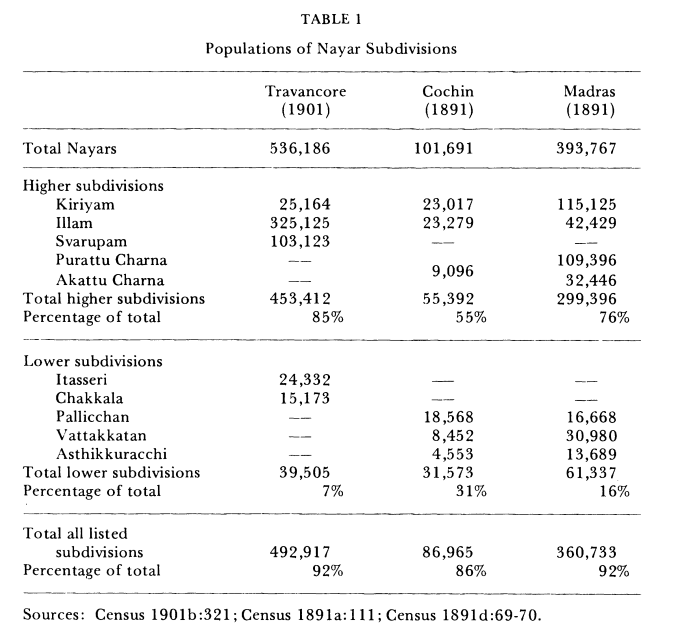
Comments
Post a Comment