Aryan assimilation theory
One of the major matters discussed among various authors in context of the Indo-Aryan invasion/immigration theory is about the supposed non-Indo-European terms found in the Vedic literature. For instance, noted Indologists and Indo-Europeanists like Michael Witzel (2003), Alexander Lubotsky (2001), JP Mallory and DQ Adams (2006) etc have highlighted certain words which they suggest to be derived from the unattested language of the bronze age Bactria-Margiana archaeological complex or the Oxus civilization of Central Asia, which they deem as non-Indo-European, since the cognates of these words are not encountered in other Indo-European branches (in some cases, noted only in neighboring Tocharian branch). These words include names of Vedic sages like Atharvan, Kaśyapa etc. They suggest the proto-Indo-Iranians of the steppes borrowed these names from the Oxus civilization after they took over the native culture before they moved into India and Iran.
It is important to note that these names are so crucial to the Vedic culture since in many passages of Rig Veda (RV 1.83.5, 10.21.5, 10.92.10, 6.16.13 etc) the sage Atharvan is mentioned as among the first to kindle the sacred fire. It is interesting that many authors also highlight Iṣṭaka, the word for the bricks, as a loan from Oxus civilization. Brick altars are important part of Vedic rituals and hence, if we consider these names as non-Indo-European, then the conclusion would be that the core elements of Vedic rituals were borrowed from non-Indo-European culture of Oxus civilization by the steppe Indo-Iranians before they moved into India and Iran. This is indeed the opinion of Witzel (2023) who writes that the practice of Agnicayana or the Vedic ritual of piling up a grand brick altar is a borrowing from non-Indo-European Oxus civilization along with bricks. It is to be noted that such grand rituals involving brick-made altars in diverse geometric shapes are not encountered in any other Indo-European branches. Mallory and Adams (1997) had also noted that the Vedic brick altars are difficult to integrate into the Indo-European framework.
Further, the Sage Kaśyapa is an important figure in Vedic mythology. In the Atharva Veda Śaunaka Saṃhitā 19.53.10 he is mentioned as Svayambhū or self-existent and in Taittirīya Saṃhitā 5.6.1.1 of Yajur Veda he’s a celestial figure who took birth from the primeval waters along with Gods like Indra and Agni. In Śatapatha Brāhmaṇa 7.5.1.5 of the Vājasaneyi Yajur Veda Saṃhitā, he appears as the creator Prajāpati who took the form of a tortoise and created beings. In later Hindu tradition, Kaśyapa became the father figure of both Devas and Asuras, and other celestial beings. If his name is non-Indo-European as the Indo-Europeanists suggest, then it would also mean that a non-Indo-European ancestral or creator figure was incorporated into the Vedic mythology.
Apart from these important non-Indo-European names supposedly borrowed from Oxus civilization, there are also certain other names of important Vedic figures which are said to be non-Indo-European. Witzel (1999) includes names of sages like Kuśika, Agastya and Kaṇva, and kings like Ikṣvāku, Yadu and Nahuṣa among non-Indo-European names found in the Rig Veda.
Among these, Agastya is traditionally a sage who is associated with southern India, as the first sage to cross the Vindhya mountains and attained revelation of Tamil language. In Jaiminīya Brāhmaņa 2.220 of Sāma Veda, Agastya is said to be the last sage to enter heaven and seems to be from outside of the Kuru-Pañcāla lands where the Vedic orthodoxy prevailed. Linguist Franklin Southworth had suggested the Dravidian root for the name Agastya (Southworth 2005). As for Kaṇva, Kuiper (1991 regard the name to be of non-Indo-European origin and Witzel (2023) connects it with the name of Atharvan, another non-Indo-European name as discussed above. Witzel (2000) further notes about the likely ‘para-Munda’ connection of the name Kuśika/Kauśika, connected with the clan of Sage Viśvāmitra.
Apart from names of these sages, the names of the ancestral kings like Ikṣvāku, Yadu and Nahuṣa are also cited as being non-Indo-European (Witzel 1999). While the origin of the name of king Nahuṣa, an ancestral figure of Vedic clans belonging to the Lunar dynasty of Ilā mentioned in Rig Veda, remains unclear, Southworth (2005) mentions probable Dravidian roots for the names Ikṣvāku and Yadu. Meanwhile, as per Witzel (1999), the name of Kosala, the royal capital of the Solar dynasty of Ikṣvāku, is of supposed Tibeto-Burman origin.
To sum up, if we dwell into the writings of Indo-Europeanists, the names of many important figures found in Vedic literature should be deemed as non-Indo-European and thus non-Aryan in origin. This being the case, all the talk of Aryan ‘invasion’ and destruction of nature culture seems to be absurd, as it is clear from the linguistics that the local non-Indo-European figures including important priests and kings along with ritual and mythological elements were incorporated into the Vedic tradition, and thus, there was cultural synthesis rather than replacement.
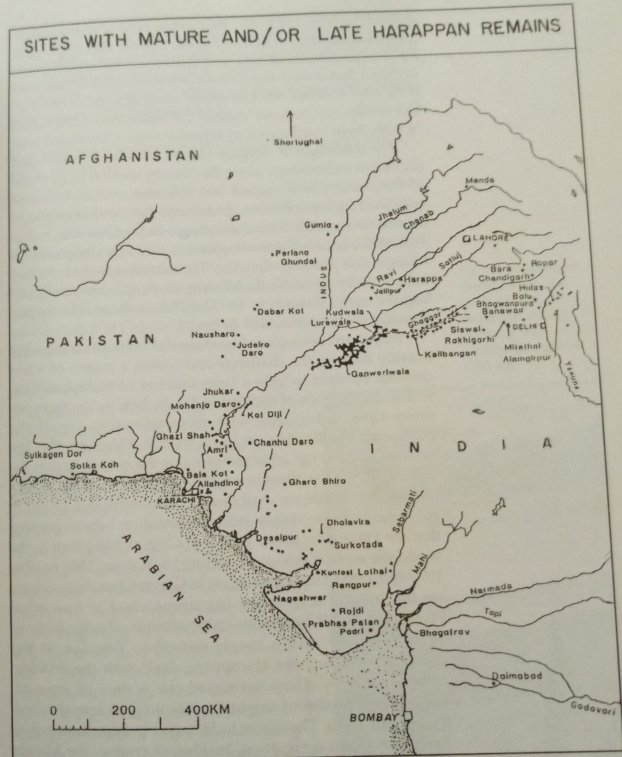
If one goes by post-Harappan movement of Indo-Aryans into India, then it’s clear that local priests and kings of the Oxus civilization and post-Harappan India were absorbed into the Vedic tradition as the elites. Whereas if one prefers to view that Vedic people were already existing in the Harappan zones, then it would seem that they interacted with neighboring groups and gradually assimilated them into Vedic fold as part of Vedic expansions. This is plausible considering the Harappan civilization was the largest bronze age civilization in terms of area and population, it’s likely that the regions hosted diverse linguistic and cultural groups just like today.
Bibliography
The Languages of Harappa (2000) by Michael Witzel
Aryan and non-Aryan Names in Vedic India –
Data for the linguistic situation, c. 1900-500 B.C. (1999) by Michael Witzel
Linguistic Evidence for Cultural Exchange in Prehistoric Western Central Asia (2003) by Michael Witzel
The Realm of the Kuru – Origins and Development of the First State in India (2023) by Michael Witzel
Aryans in the Rigveda (1991) by By FBJ Kuiper
The Indo-Iranian substratum (2001) by Alexander Lubotsky
The Oxford Introduction to Proto-Indo-European and the Proto-Indo-European World (2006) by JP Mallory and DQ Adams
The Encyclopedia of Indo-European Culture (1997) by JP Mallory and DQ Adams
Linguistic Archaeology of South Asia (2005) by Franklin C Southworth
Comments
Post a Comment